Frankenstein: Who's the Monster?
Exploring Mary Shelley's classic novel: Is the real monster Victor Frankenstein or his creation? A deep dive into the themes of responsibility and humanity.
Posted by
 Fred
FredRelated reading
Napoleon vs Snowball: Who's the Real Villain?
In Animal Farm, Napoleon brands Snowball a traitor—but what if we've been deceived? Examining the evidence reveals who the real villain truly is.
Introduction
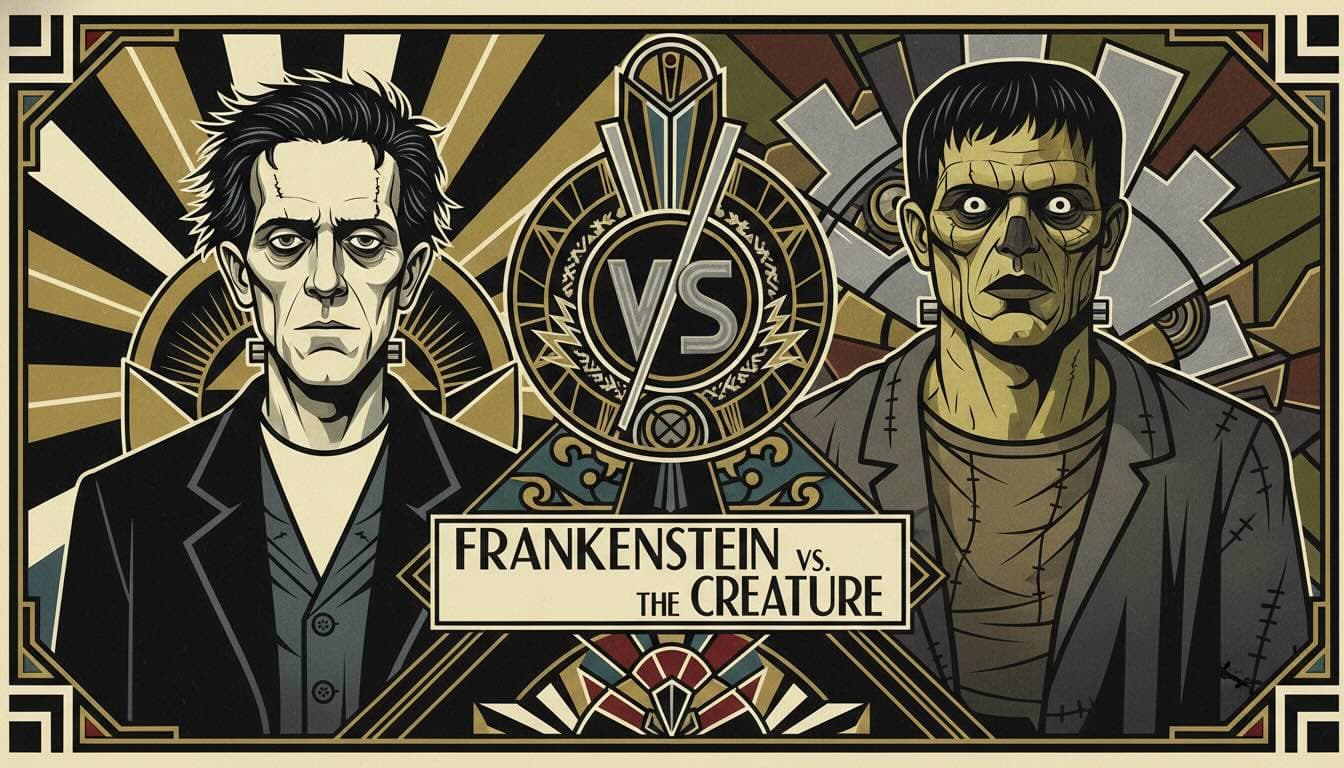
Mary Shelley's "Frankenstein" has captivated readers for over two centuries, but one question continues to spark debate: Who is the real monster? Is it the creature brought to life by Victor Frankenstein, or is it Victor himself? This question lies at the heart of Shelley's masterpiece and reveals the novel's profound exploration of responsibility, humanity, and the consequences of playing God.
The Case Against Victor Frankenstein
Victor Frankenstein's actions throughout the novel paint a troubling picture. He creates life without considering the consequences, abandons his creation immediately after bringing it to life, and refuses to take responsibility for the being he has created. His obsession with scientific achievement blinds him to the moral implications of his work.
When the creature first opens his eyes, Victor's immediate reaction is one of horror and rejection. He flees, leaving the creature alone and confused in a world that will never accept him. This abandonment sets in motion the tragic events that follow.
The Creature's Perspective
The creature begins as an innocent being, eager to learn and understand the world around him. He learns language, reads classic literature, and develops a deep capacity for emotion. However, his appearance makes him an outcast, and every attempt at connection ends in rejection and violence.
The creature's descent into violence is not born of inherent evil, but of the pain of isolation and the cruelty he experiences at the hands of humans. His request to Victor—to create a companion for him—is a desperate plea for connection and belonging, which Victor ultimately denies.
The Real Monster: Neglect and Rejection
Perhaps the true monster in "Frankenstein" is not a character at all, but rather the themes of neglect, rejection, and the failure to take responsibility. Victor's refusal to acknowledge his creation as his responsibility mirrors society's tendency to reject what it doesn't understand.
The novel serves as a cautionary tale about the dangers of unchecked ambition and the importance of taking responsibility for one's actions. Victor's scientific achievement becomes his greatest failure because he never considers the moral and ethical implications of creating life.
Conclusion
The question of who the real monster is in "Frankenstein" has no simple answer. Both Victor and his creation exhibit monstrous behavior, but their actions stem from different sources. Victor's monstrosity lies in his abandonment of responsibility and his rejection of his creation. The creature's violence, while horrific, is a response to the rejection and isolation he experiences.
Ultimately, Shelley's novel challenges us to consider what makes someone truly monstrous. Is it appearance? Actions? Or is it the failure to show compassion and take responsibility for the consequences of our choices? As you listen to this classic tale, let these questions guide your understanding of one of literature's most enduring works.
